
Best frameworks for building customer-facing AI agents in 2026
 Cosette CresslerContent & Product Marketing Lead
September 29, 20269 min read
The best frameworks for building customer-facing AI agents in 2026 include Agno, LangGraph, the OpenAI Agents SDK, Google's Agent Development Kit (ADK), Mastra, and the Vercel AI SDK. Which one fits depends on your language, how much of the serving layer you want to build yourself, and whether you're tied to a particular model provider or cloud.
Most framework comparisons assume an internal agent, like a research assistant or a scheduled workflow. A customer-facing agent can be used by thousands of people, each with their own data and permissions, and some of its actions, such as refunds or account changes, can't easily be undone. That moves isolation, authentication, and approval flows to the top of the list.
We build Agno, so read our take on it with that in mind. We've tried to judge every framework, ours included, on the same criteria and be clear about where another framework is the better fit.
What should you look for in a framework for customer-facing agents?
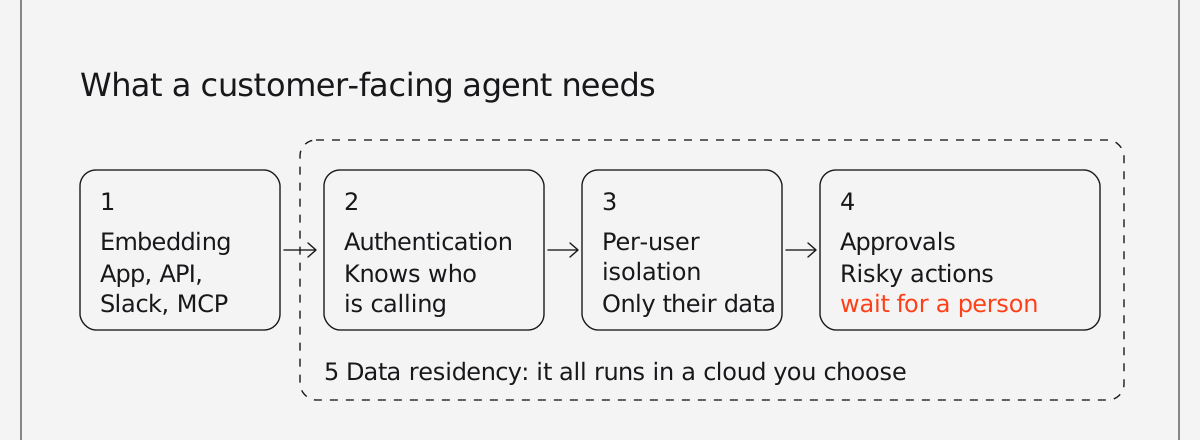
Look for five things: per-user isolation, authentication against your existing identity provider, human approval for risky actions, a way to embed the agent in your product, and control over where data lives.
Per-user isolation
One customer's conversation, memory, and data must never reach another customer. Ask whether the framework scopes sessions and memory to a user or tenant for you, or whether you have to build and enforce that yourself.
Authentication and authorization
The agent should know who is calling and what they're allowed to do, using the identity provider you already use, such as Auth0, Okta, WorkOS, or Supabase. Tools that act on a customer's account should inherit that customer's permissions.
Approval for risky actions
Refunds, deletions, and account changes should pause until a person approves them. Check whether the pause survives a restart, since an approval can take minutes or days. Our guide to human-in-the-loop controls in production covers the patterns in more depth.
Embedding
The agent has to reach customers somehow: inside your app, through an API your frontend calls, in Slack, or as an MCP server other assistants can use. Some frameworks ship UI components, while others give you an API and leave the frontend to you.
Data residency and hosting
B2B customers will often ask where their data goes. A framework you can self-host in your own cloud gives you a different answer than one tied to a managed platform.
How do the frameworks compare?
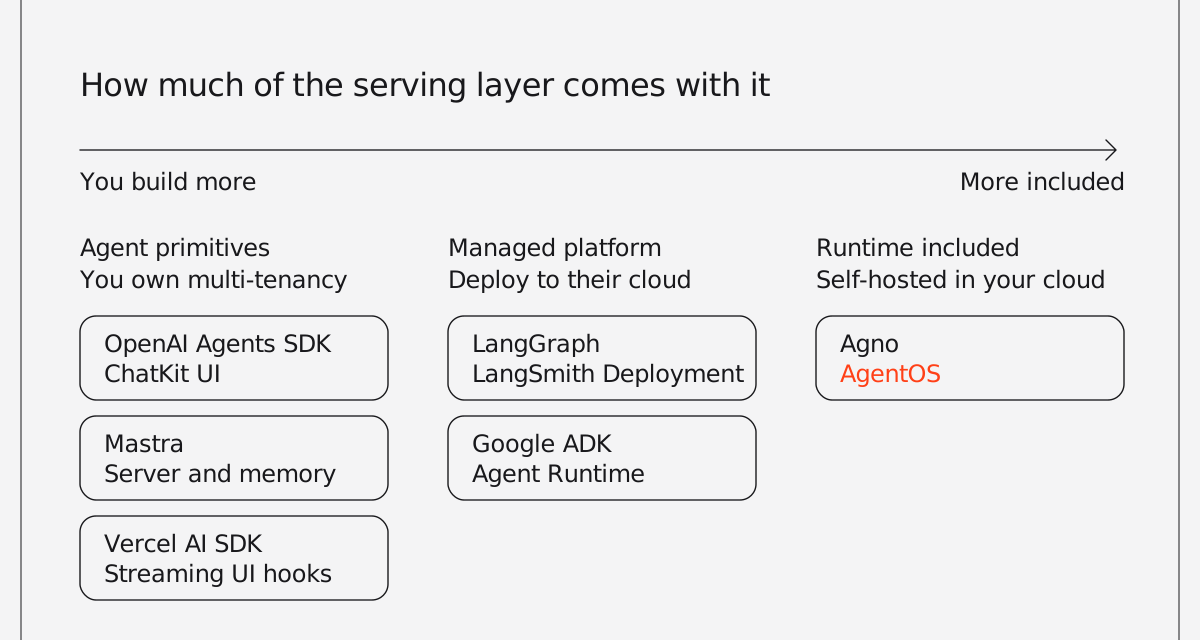
The biggest difference between these frameworks is how much of the serving layer you get out of the box. Agno ships a runtime with auth and per-user scoping. LangGraph provides deployment and multi-tenant capabilities through LangSmith Deployment. Google ADK gets managed sessions and scaling from Agent Runtime on Google Cloud. The OpenAI Agents SDK, Mastra, and the Vercel AI SDK give you strong agent primitives while leaving more of the multi-tenant serving layer to you.
Details as of September 2026:
| Framework | Language | Per-user isolation | Auth | Human approval | Reaching customers | Hosting |
|---|---|---|---|---|---|---|
| Agno (with AgentOS) | Python | Request isolation built in; per-user sessions and memory with one setting (user_isolation=True) | JWT-based RBAC with your own identity provider | Built in, including admin approvals | REST API, MCP server, AG-UI, Slack | Self-hosted in your cloud (Apache 2.0) |
| LangGraph | Python, JavaScript | Owner-scoped threads through custom auth handlers | Custom auth handlers, any provider | Interrupts | API; useStream React hook, Agent Chat UI, or partners like CopilotKit | Managed (LangSmith Deployment) or self-hosted |
| OpenAI Agents SDK | Python, TypeScript | Sessions per conversation; tenant scoping is yours to build | Yours to build | needs_approval with resumable run state | ChatKit UI components | Anywhere |
| Google ADK | Python, TypeScript, Go, Java, Kotlin | Sessions and state keyed by user ID | Handled at your API or Google Cloud | Tool confirmation; long-running function tools | API endpoint through Agent Runtime | Agent Runtime, Cloud Run, or self-hosted |
| Mastra | TypeScript | Memory threads scoped per user | Auth providers such as Auth0, Clerk, Okta, and WorkOS; RBAC in the Enterprise Edition | Workflow suspend and resume | React and Next.js integration, generated REST API | Self-hosted or the Mastra platform |
| Vercel AI SDK | TypeScript | Yours to build | Yours to build | Tool approvals; durable with WorkflowAgent | React hooks such as useChat | Anywhere; smoothest on Vercel |
What are the best frameworks for customer-facing AI agents?
Each entry below covers who the framework suits, how it handles isolation, auth, and approvals, and where it falls short.
1. Agno: for self-hosted Python agents
Agno suits Python teams that want to run a customer-facing agent in their own cloud without building the serving, auth, and governance layers themselves. It's an open-source framework for agents, teams, and workflows, paired with AgentOS, a runtime that serves them as a production API.
AgentOS gives every request a fresh copy of the agent, so state doesn't bleed between runs, and one setting scopes sessions and memory to the signed-in user. It checks each call against your own JWT setup, with role-based access control that works with providers such as WorkOS, Auth0, and Okta. Human-in-the-loop and admin approvals are enforced in the runtime, and with the durable queue enabled, a run waiting on approval survives a restart. For a full walkthrough, see How to build an agent for your product and serve it everywhere.
The same agent can be served as a REST API, an MCP server, over AG-UI, or in Slack. AgentOS runs as a container in your VPC and stores sessions, traces, and memory in your database. The SDK and runtime are Apache 2.0.
Agno is Python-only, so TypeScript teams will need a separate backend service. It doesn't ship its own chat UI components, but its AG-UI interface works with AG-UI frontends such as CopilotKit.
2. LangGraph: for complex, graph-based agent logic
LangGraph works well for teams that want fine-grained control over agent logic and already use the LangChain ecosystem. It models an agent as a state graph, which makes branching flows explicit. LangSmith Deployment supports custom authentication handlers: you verify the user with any provider, then stamp resources such as threads with an owner so each user can only reach their own conversations. Interrupts let a graph pause for human input.
The graph model takes longer to learn than a plain agent loop. Some capabilities for deploying and managing multi-tenant agents also depend on LangSmith Deployment, so check what your plan and hosting option include before committing.
3. OpenAI Agents SDK: for teams building with OpenAI
If you're already building with OpenAI and want a chat UI quickly, the Agents SDK offers a short path. Available in Python and TypeScript, it handles the agent loop, tools, handoffs, and guardrails. Marking a tool needs_approval pauses the run and returns the pending approvals, which you can resume later from saved state. ChatKit, OpenAI's toolkit for embedding chat-based agents in a product, provides the frontend and can connect to your own server-side agent.
You'll build tenant isolation, authentication, and hosting yourself. Its tooling is also built around OpenAI's models and APIs, so switching providers later takes more work.
4. Google ADK: for teams on Google Cloud
ADK is a natural choice for teams on Google Cloud, and it's available in Python, TypeScript, Go, Java, and Kotlin. It keys sessions and state by user ID and session ID, and its user: state scope persists across one user's sessions. Deployed to Agent Runtime (formerly Vertex AI Agent Engine), an agent gets managed sessions, memory, autoscaling, and tracing behind an API endpoint. Tool confirmation can pause a tool call for a yes or no, and long-running function tools can pause for external input before continuing.
The smoothest path runs through Google Cloud, and you still authenticate end users at your own API before passing a user ID to the agent. ADK can call non-Google models, but much of its surrounding tooling integrates closely with Gemini and Google Cloud.
5. Mastra: for TypeScript backends
For TypeScript teams building an agent into a React or Next.js product, Mastra covers a lot of ground on the backend. It combines agents, workflows, memory, evals, and observability in one framework. Its memory system scopes conversation threads per user, its workflows can suspend and resume for approval steps, and it generates a REST API for your agents.
Mastra is TypeScript-only, and its 1.0 release came in January 2026. Its API routes are public until you configure an auth provider, so plan time for that, and role-based access control is part of the separately licensed Enterprise Edition.
6. Vercel AI SDK: for streaming chat UIs
The Vercel AI SDK suits frontend-heavy TypeScript teams that want a strong streaming chat UI and are willing to build the backend. AI SDK 6 made agents a first-class primitive, and its React hooks, such as useChat, give you a direct way to stream an agent into a web UI. Tool approvals pause a call for a person, and WorkflowAgent, built on Vercel's Workflow SDK, keeps that pause durable for hours or days.
It's a toolkit rather than a full agent runtime, so per-user isolation, authentication, and session storage are yours to build. The durable pieces also integrate most closely with Vercel's own platform.
How do you choose a framework for a customer-facing agent?
Start with your language, then decide how much of the serving layer you want to own.
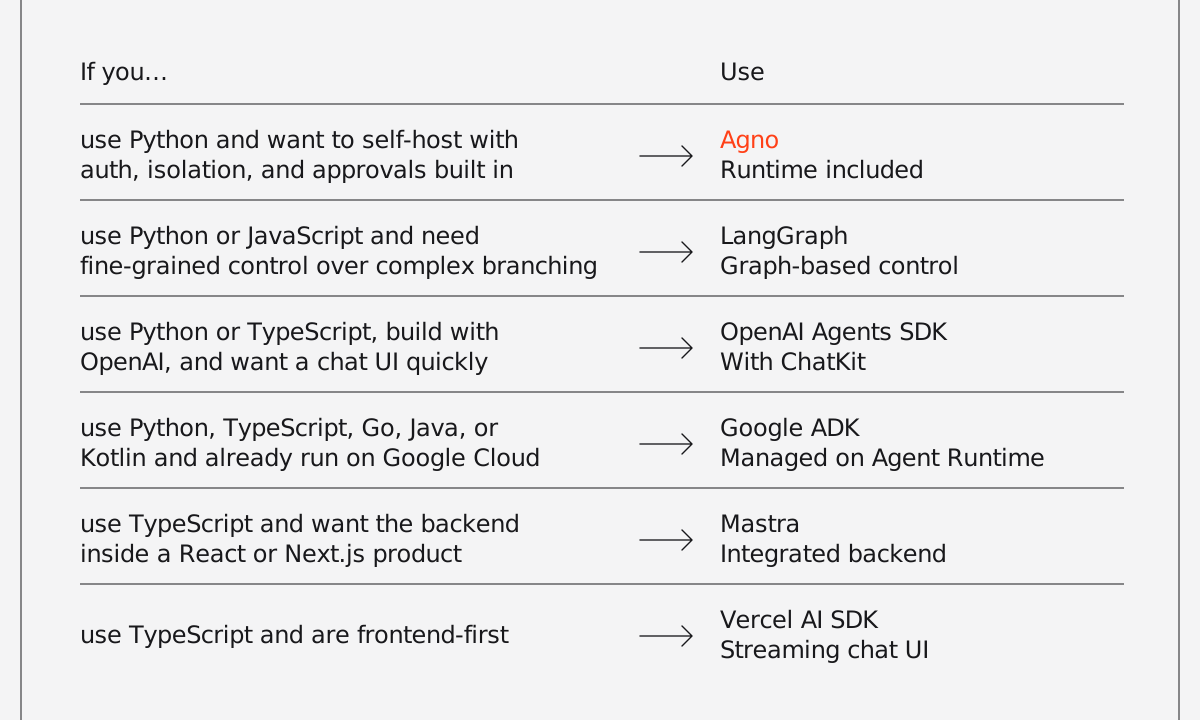
- Agno is the best fit if you use Python and need to self-host with per-user isolation, auth, and approvals built in.
- LangGraph, if you use Python or JavaScript and need fine-grained control over complex branching logic.
- The OpenAI Agents SDK with ChatKit, if you use Python or TypeScript, are building with OpenAI, and want a chat UI quickly.
- Google ADK, if you use Python, TypeScript, Go, Java, or Kotlin and already run on Google Cloud.
- Mastra, if you use TypeScript and want the agent backend integrated into a React or Next.js product.
- The Vercel AI SDK, if you're frontend-first in TypeScript and are comfortable owning more of the backend.
These choices aren't always exclusive. A common pattern is a Python agent served over an API with a TypeScript frontend, which means you can pair a backend runtime like Agno or LangGraph with UI tooling from the AI SDK or ChatKit.
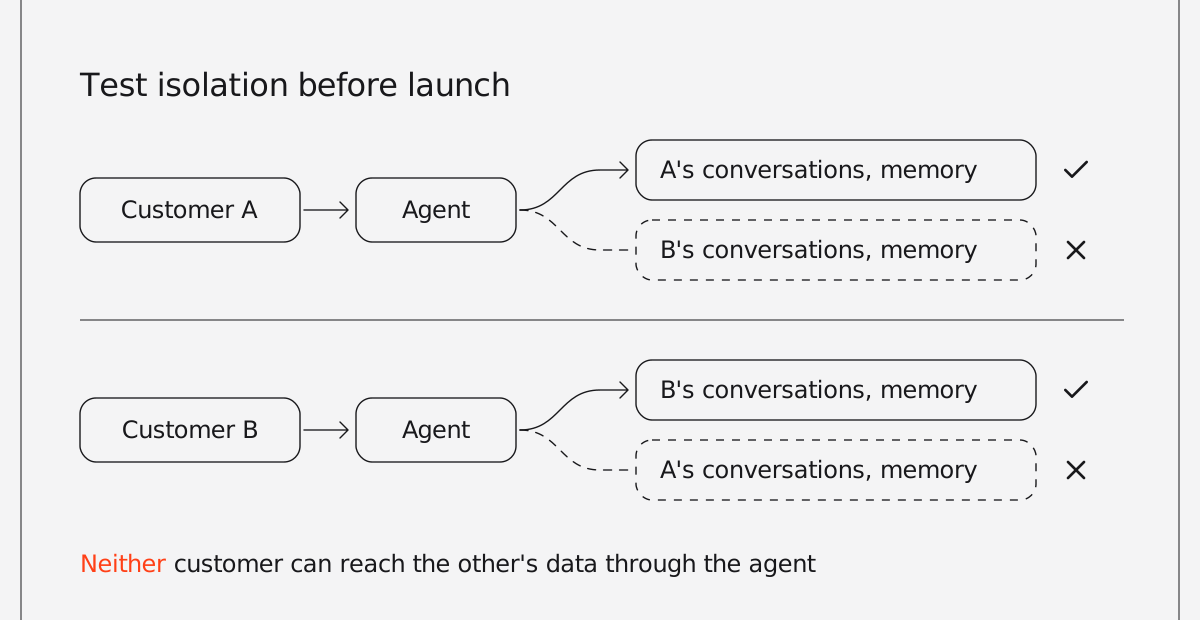
Whichever you pick, test isolation directly before launch. Log in as two different customers, have each one create data, and confirm that neither can reach the other's conversations, memory, or records through the agent.
Sources
- AgentOS product page
- LangChain: Authentication & access control
- OpenAI Agents SDK: Human-in-the-loop
- OpenAI: ChatKit guide
- Google Cloud: Manage sessions with Agent Development Kit
- Google ADK samples (Python, TypeScript, Go, Java, Kotlin)
- Mastra: AI agent framework
- Vercel: AI SDK 6
- Vercel: AI SDK 7
- Vercel: Build AI agents with AI Gateway and AI SDK
Frequently asked questions
It depends on your stack. For Python teams that need to self-host with per-user isolation, auth, and approvals built in, Agno is the best fit. LangGraph suits teams that want graph-level control and a managed deployment option. For TypeScript, Mastra covers more of the backend, while the Vercel AI SDK focuses heavily on the application and UI layer. The OpenAI Agents SDK and Google ADK fit naturally into their respective ecosystems.
For Python teams, Agno. AgentOS runs as a container in your own cloud and stores sessions, traces, and memory in your database, with JWT auth, per-user isolation, and approvals built into the runtime, so no managed platform is required. LangGraph can also be self-hosted, but some of its multi-tenant capabilities depend on your LangSmith Deployment plan. For TypeScript teams, Mastra's server self-hosts, with role-based access control in its Enterprise Edition.
Agno handles it in the runtime: set user_isolation=True and AgentOS scopes every session, memory, and run to the signed-in user from their JWT. LangGraph does it through custom auth handlers you write on LangSmith Deployment, Google ADK keys sessions by a user ID you pass in, and Mastra scopes memory threads per user. With the OpenAI Agents SDK and the Vercel AI SDK, you build it yourself. Whichever you choose, test it by signing in as two customers.
For Python, Agno if you want a self-hosted runtime with auth, per-user isolation, and approvals built in, the OpenAI Agents SDK if you build with OpenAI and want a chat UI quickly, and Google ADK if you run on Google Cloud. For TypeScript, Mastra for an integrated backend and the Vercel AI SDK for a frontend-first streaming UI. LangGraph remains the strongest choice when your agent logic is a complex, branching graph.
Agno fits Python teams that want the serving layer included: AgentOS is an Apache 2.0 runtime you self-host, with JWT auth, per-user isolation, and approvals in the box. LangGraph fits teams that want fine-grained control over branching logic, in Python or JavaScript, and it handles multi-tenant auth through custom handlers on LangSmith Deployment, so check what your plan includes. Agno is the simpler path to a multi-tenant agent in your own cloud; LangGraph gives you more control over the graph.
You need two pieces: a backend that serves the agent to many users safely, and a frontend that shows it. Agno's AgentOS, LangSmith Deployment, and Google Cloud's Agent Runtime can handle the backend. OpenAI's ChatKit and the Vercel AI SDK's React hooks handle the frontend, while Mastra integrates directly with Next.js.
Customer-facing agents serve many users, each with their own data and permissions, so you need to isolate users, authenticate every request, and control risky actions. Internal agents usually serve a smaller, more trusted group, so those requirements are often lighter.
Scope every session, memory, and tool call to the authenticated user or tenant, and enforce that scope on the server, not in the UI. Pick a framework that does this for you or makes it explicit, and test it by logging in as two customers and trying to reach each other's data.
Yes. Serve the agent from a Python runtime such as Agno or LangGraph over a REST API, and call it from a TypeScript frontend built with React, Next.js, or UI tooling like the Vercel AI SDK.
All six frameworks here have free, open-source SDKs, but they differ in what they include beyond the SDK. Agno's AgentOS runtime is Apache 2.0 and self-hosted, so auth, per-user isolation, and approvals don't require a separate managed deployment platform. Some of LangGraph's deployment and multi-tenant capabilities are provided through LangSmith Deployment.
Pair a backend that serves the agent to each user with a frontend component inside your app. You can serve an Agno or LangGraph agent over an API and render it with the Vercel AI SDK or ChatKit, or keep the stack in TypeScript with Mastra and Next.js. Either way, scope each session to the signed-in user and have the agent's tools act with that user's permissions.
Assume some input will be hostile. Give the agent only the tools and data the signed-in user is allowed to use, require approval for irreversible actions, and add guardrails around untrusted input and sensitive operations. Every framework here gives you a place to add them: Agno and the OpenAI Agents SDK have guardrails, LangChain has guardrail middleware such as PII redaction, Mastra has processors including a prompt-injection detector, ADK uses callbacks and plugins, and the AI SDK uses language-model middleware.
Others also liked...
September 1, 2026
Engineering, Guides
How to build an agent for your product and serve it everywhere

Ashpreet Bedi
6 min read
April 23, 2026
Engineering
How to add human-in-the-loop controls to AI agents that actually run in production
Cosette Cressler
13 min read
March 4, 2026
Engineering, Product, Perspectives
Native tracing: Because full observability for your agents shouldn’t require a security review
Cosette Cressler
3 min read